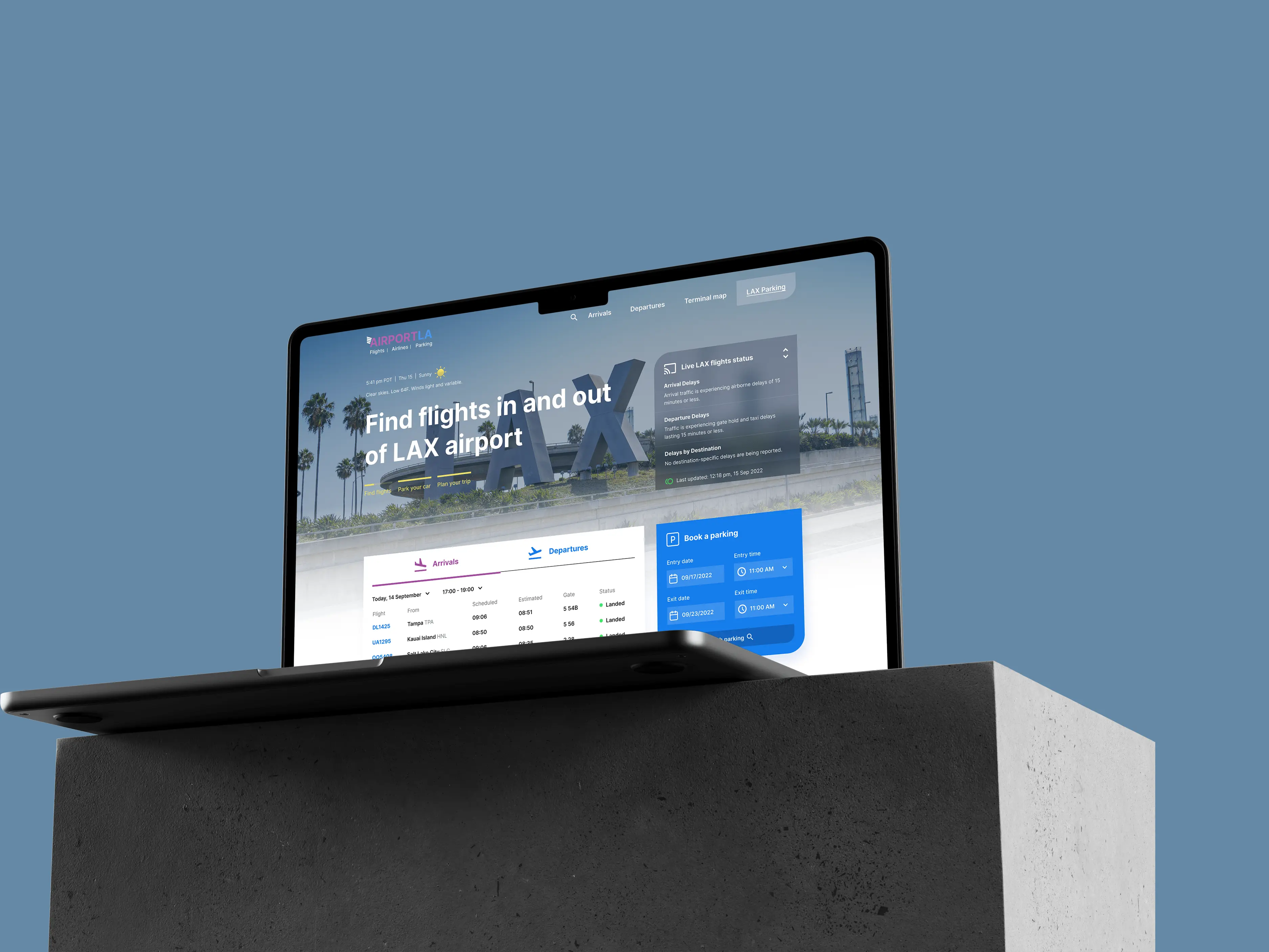
Case Study — 2023
A reimagined airport experience — wayfinding, gate management, and a real-time travel companion for Los Angeles International Airport.
LAX serves tens of millions of passengers a year across nine terminals, and its existing digital tools hadn't kept pace with the physical growth of the airport. Travellers were relying on static signage and inconsistent gate information, often discovering delays or gate changes only after arriving at the wrong terminal.
The brief was to design a mobile companion that could hold a traveller's hand from curb to gate — real-time, personal, and legible under stress, since most of these interactions happen when people are rushing, jet-lagged, or anxious about making a flight.
My role covered UX research, information architecture, and interface design for the core app experience, working alongside the airport's operations team to align the product with real terminal data feeds.
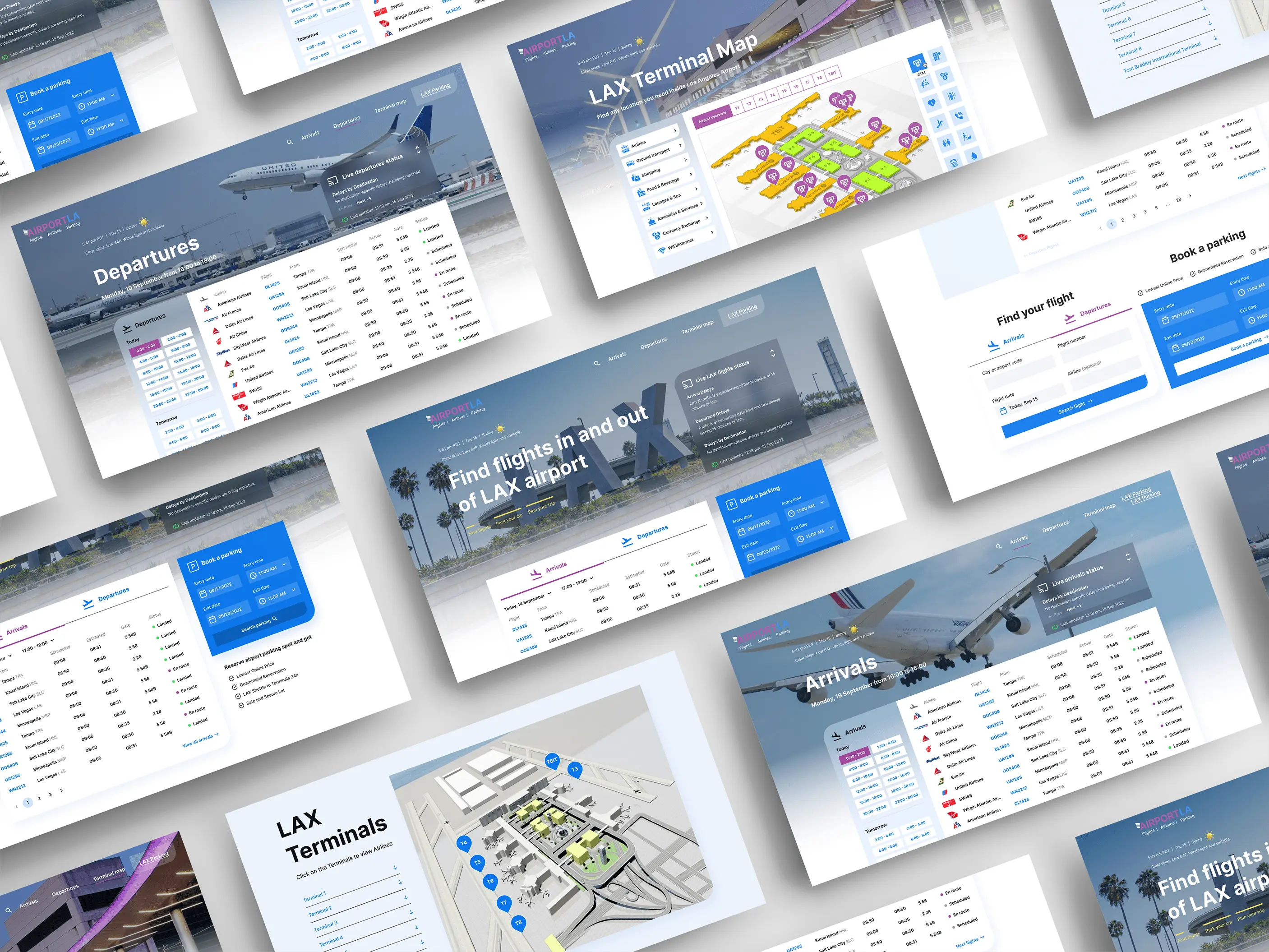
Field research at the terminals surfaced a clear pattern: travellers don't read, they scan. The interface was built around large, high-contrast type, a single primary action per screen, and a persistent live gate and time-to-walk indicator that stayed visible no matter where in the app a traveller was.
Wayfinding was rebuilt as a turn-by-turn indoor map fed by the airport's own beacon network, replacing the static terminal maps that most passengers had learned to ignore. Push notifications were redesigned to surface only decision-relevant changes — gate moves, boarding calls, security wait times — cutting notification fatigue considerably.
Accessibility was a first-class constraint throughout: the app needed to work one-handed, in bright terminal lighting, for travellers of every age and language background.
"In an airport, good design isn't decoration —
it's the difference between making the flight and missing it."
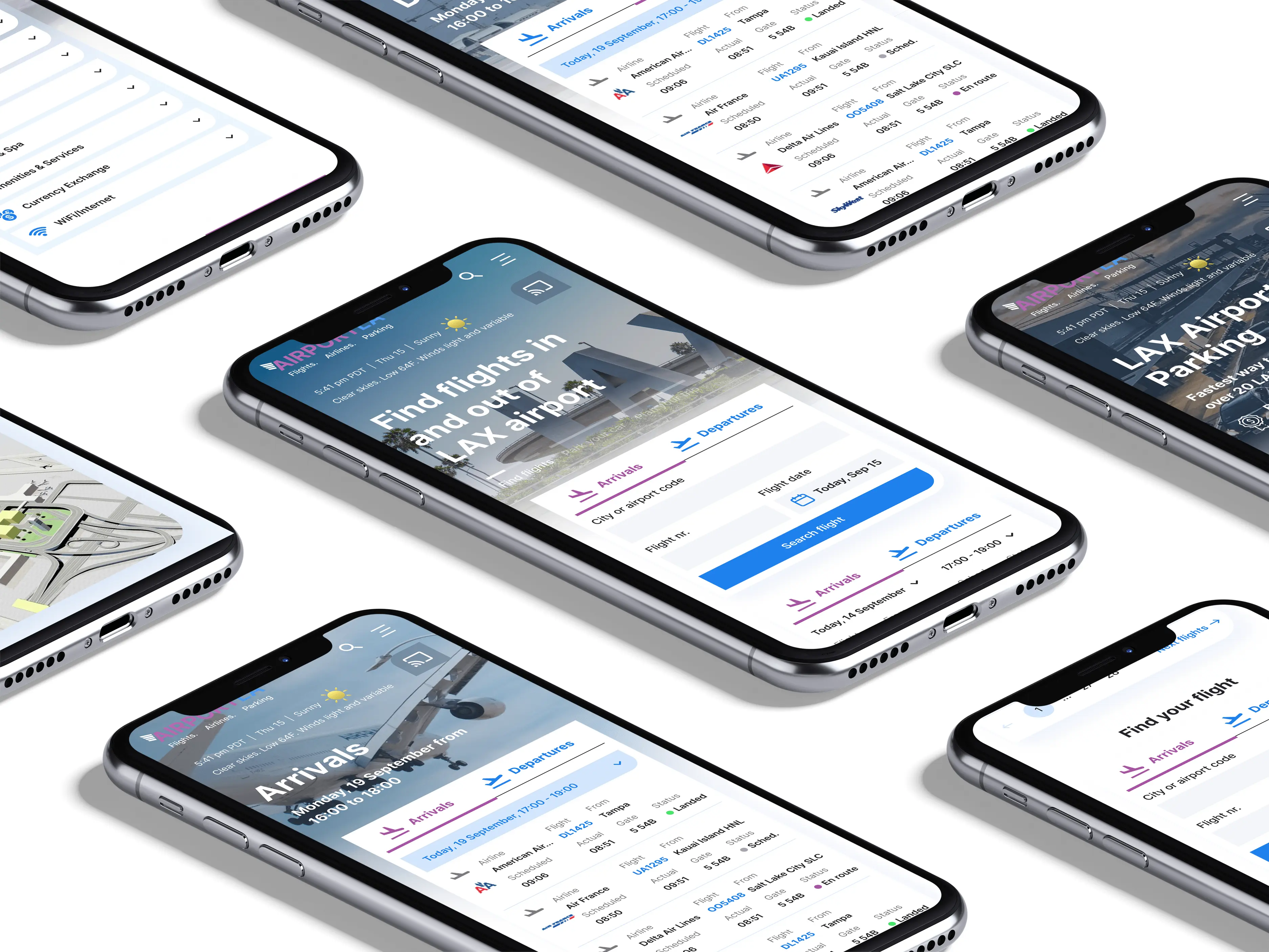
The finished app gave travellers a single, reliable source of truth from the moment they entered the terminal to boarding — reducing the anxious terminal-hopping that static signage had never solved.
The wayfinding and notification system became a reference point for the airport's broader digital transformation efforts, with the underlying interaction patterns adopted across other passenger-facing touchpoints.